High pressure coffee
The project
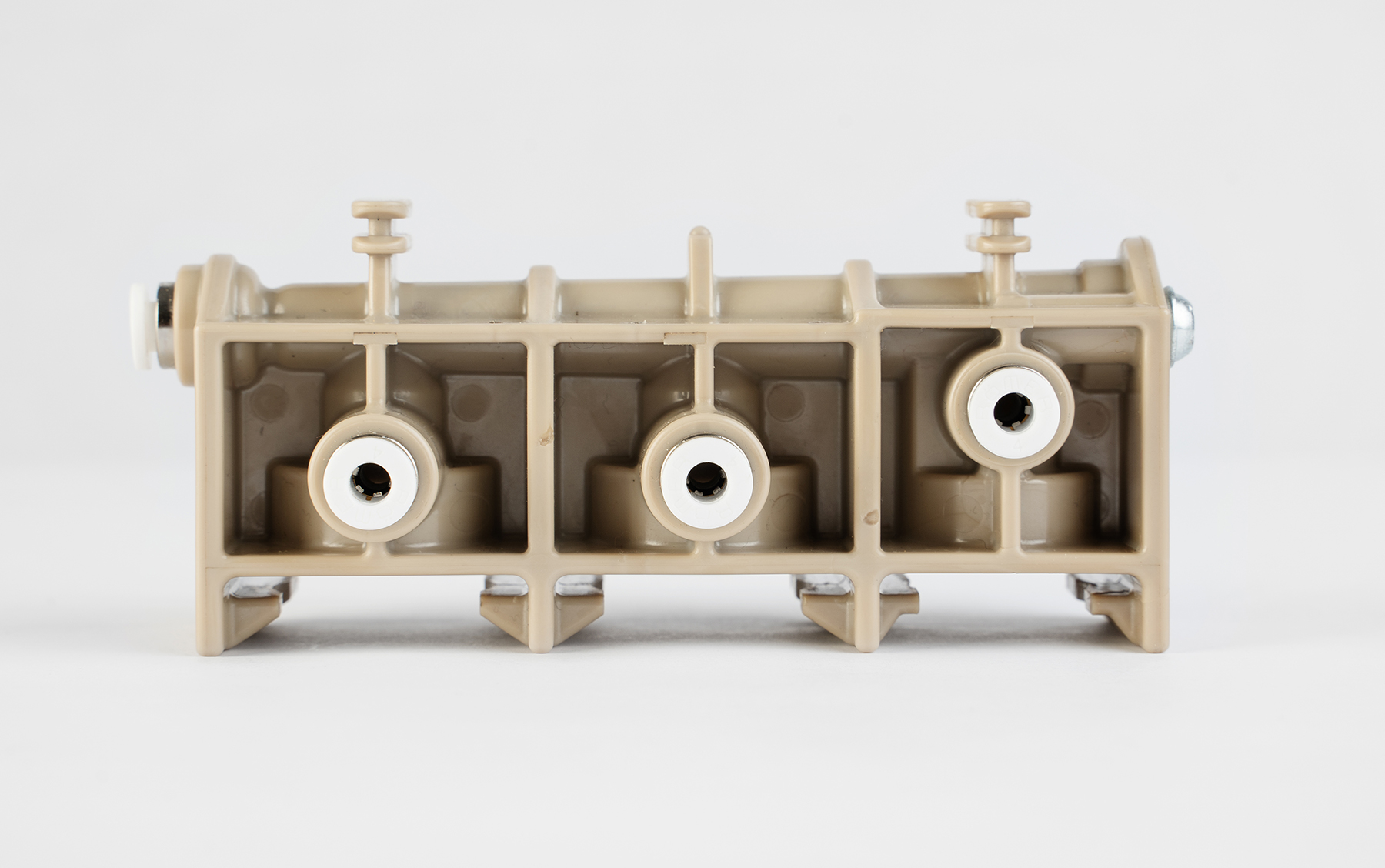
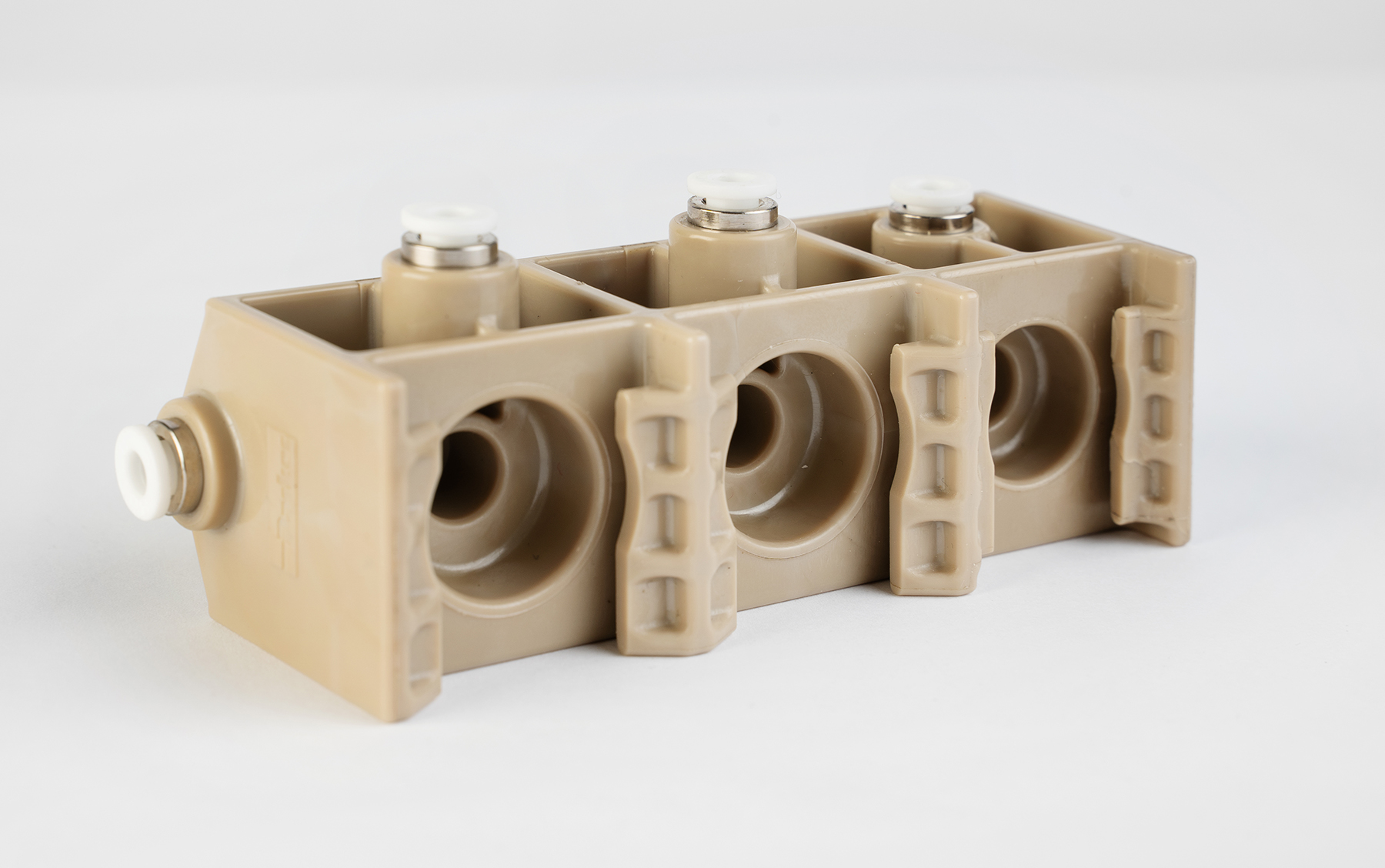
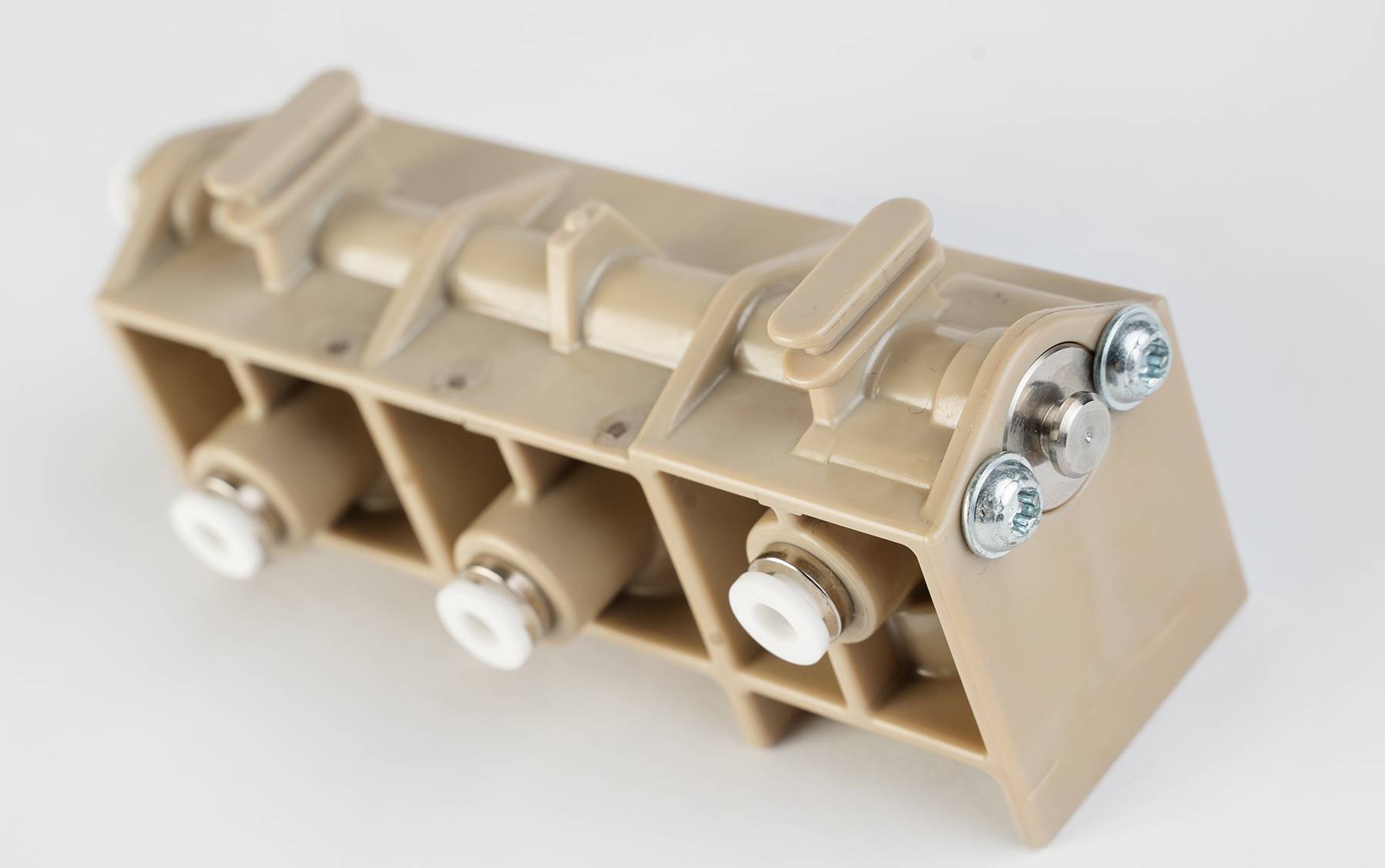
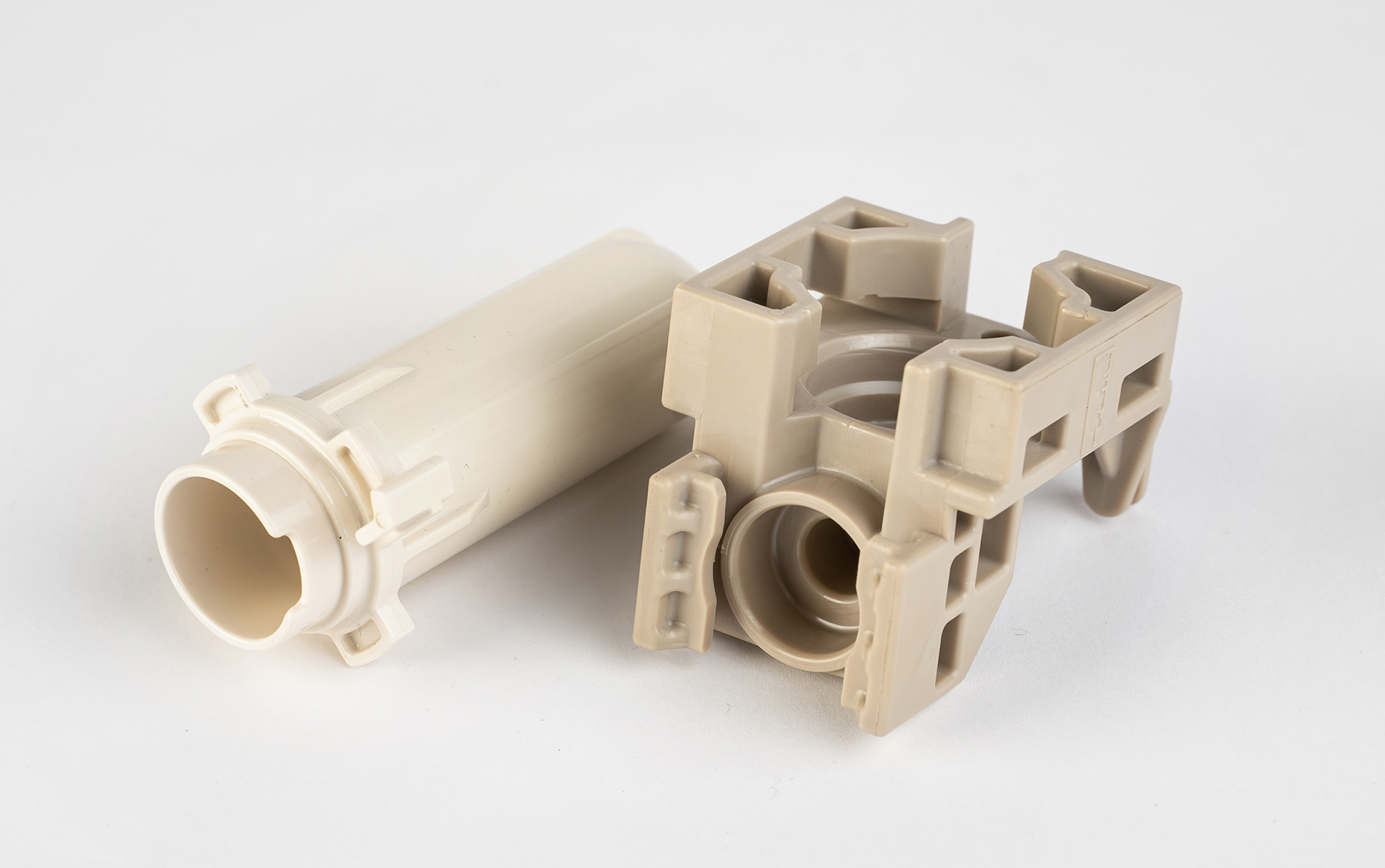
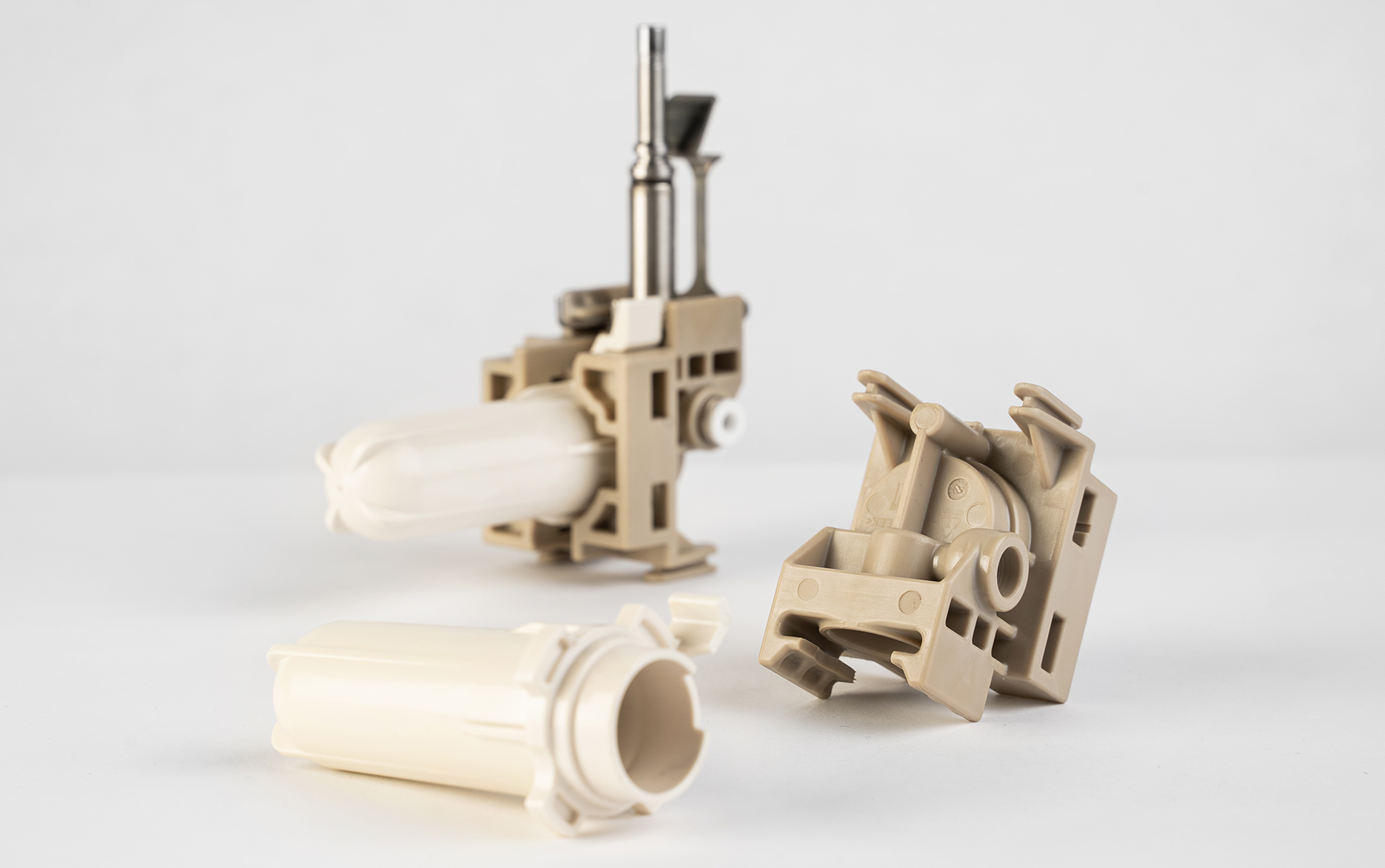
Develop plastic components for a coffee machine intended for automatic beverage dispensing, with a focus on resistance to high pressures and temperatures. It was planned to replace metal elements with PEEK in order to reduce costs and improve lead time.
Sector:
Technologies involved:
Initial requirement
Ensuring resistance to repeated pressure and heat cycles, direct contact with liquids, strict dimensional tolerances and food compatibility. The aim was also to optimise the production workflow by reducing costs and delivery times, in order to speed the product to market.
What was the problem?
Identifying suitable materials to produce technical components operating under critical conditions, reducing lead times and budgets. The components had to ensure adaptability to mass production and compliance with aesthetic, dimensional and regulatory requirements for food use.
What was the client looking for?
Construction alternatives that accelerate time-to-market while achieving the same performance in terms of tightness, strength, durability, lightness, stability, workability, technical quality and functionality.
The challenge
The request involved overcoming two significant limitations: high production costs and uncompetitive lead times. The existing components, made of metal by die-casting and subsequent CNC machining, were costly and time-consuming. The challenge was to develop an engineering polymer alternative capable of guaranteeing high mechanical, chemical and thermal performance, while maintaining maximum dimensional precision and ensuring reliability at every cycle of use.
- Replacing die-casting (expensive machining) with a more efficient workflow.
- Reducing the number of production steps and simplify the supply chain.
- Guaranteeing resistance to pressure and heat with plastic material.
- Achieving strict dimensional tolerances in a technical component.
The process
We followed a complete and structured development flow, with a view to collaboration and planning throughout all phases, from the preliminary technical study to production. Each activity was managed in-house to ensure linearity, operational speed, and maximum control. The result is a component optimised in terms of performance and ready for use in high-stress environments.
We analysed the original metal component, identifying critical functions and areas subject to mechanical, thermal, and chemical stress. The design included the redefinition of geometries to optimise the injection flow, ensuring the correct structural replacement in the transition to the engineering polymer.
The application analysis led to the selection of PEEK, a high-performance engineering polymer suitable for contact with hot liquids, high pressures, and chemical agents. The material was validated according to criteria of resistance, stability, and food compatibility. The design of the injection layout took into account the filling and cooling behaviour of PEEK.
The mould was manufactured in-house to high precision standards. Thanks to careful design, it was possible to achieve centesimal tolerances directly at the moulding stage, eliminating the need for subsequent machining.
The component followed an injection moulding cycle, with integrated checks and functional tests carried out on a sample basis. Production was made stable and repeatable to ensure consistent performance. Assembly was handled in-house, with visual and dimensional checks on critical elements.
The result
The metal replacement operation resulted in a high-performance, lighter, food-compliant component that reduced production costs, thanks to the elimination of CNC machining and the use of engineering polymer. Lead times were also reduced: direct moulding accelerated the production, reducing delivery times. The new material also ensured greater performance in terms of functionality, strength, and adaptability to the specific context of use.
- Reduction in overall costs compared to the metal version.
- Elimination of all post-moulding machining.
- Reduced lead time due to optimised production chain.
- Lighter, stronger, and food-compatible components.
- Stable performance in operation, even after repeated cycles.
Do you have a similar project? Contact us!
If you are looking for a tailor-made solution or want to investigate the feasibility of an idea, our team is available for professional advice. We can support you at every stage of development, from initial analysis to production.