Lightweight ventilation
The project
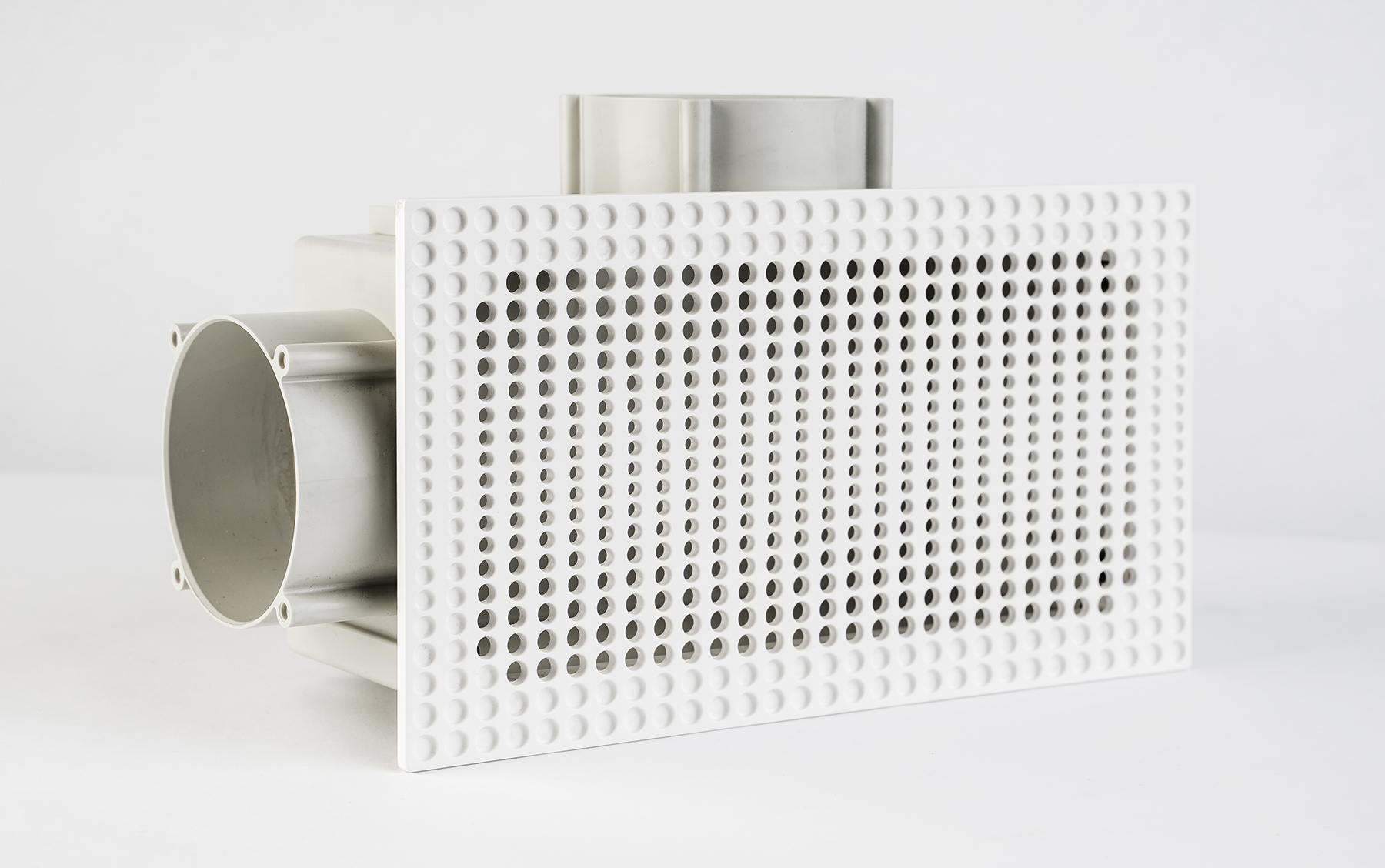
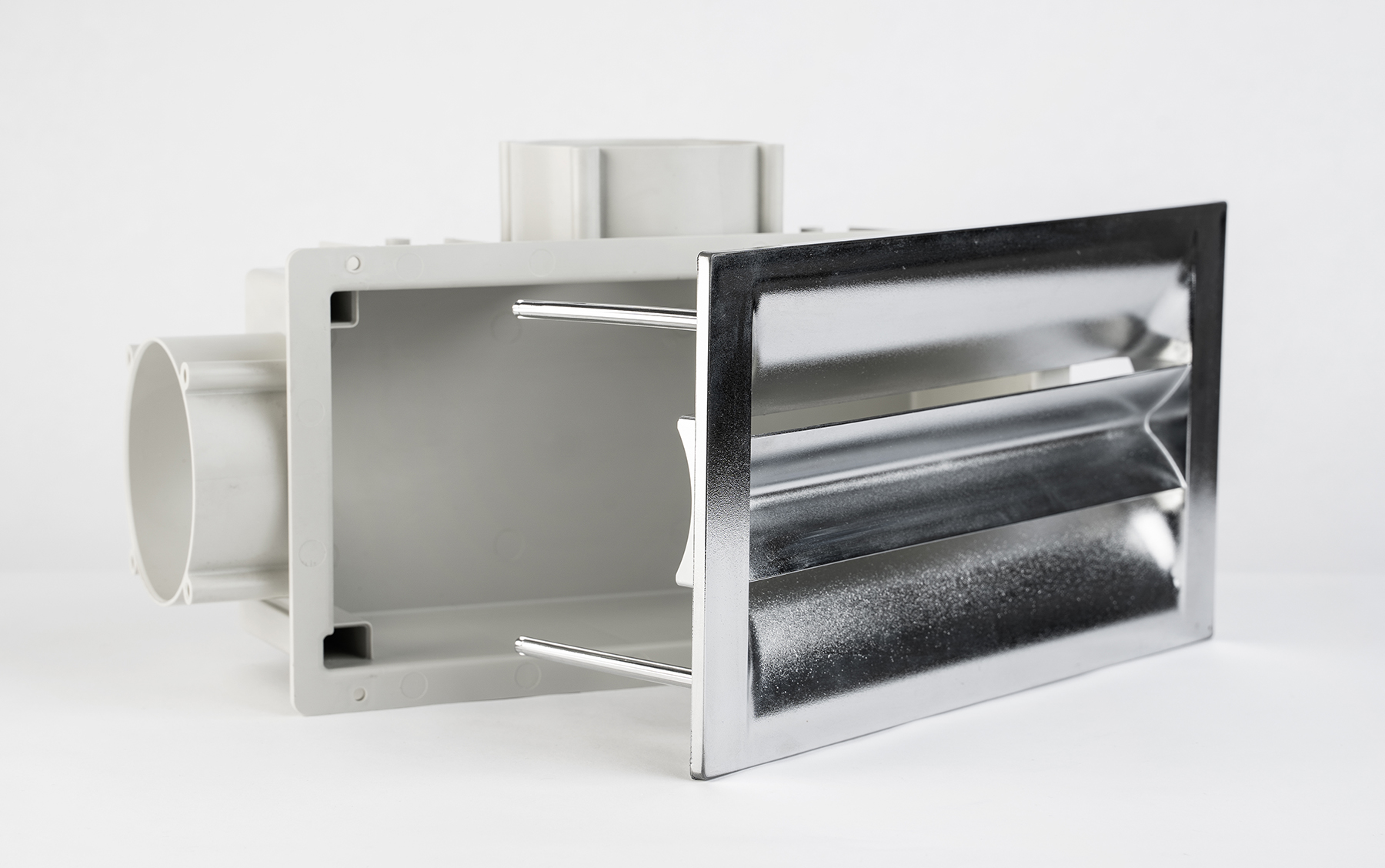
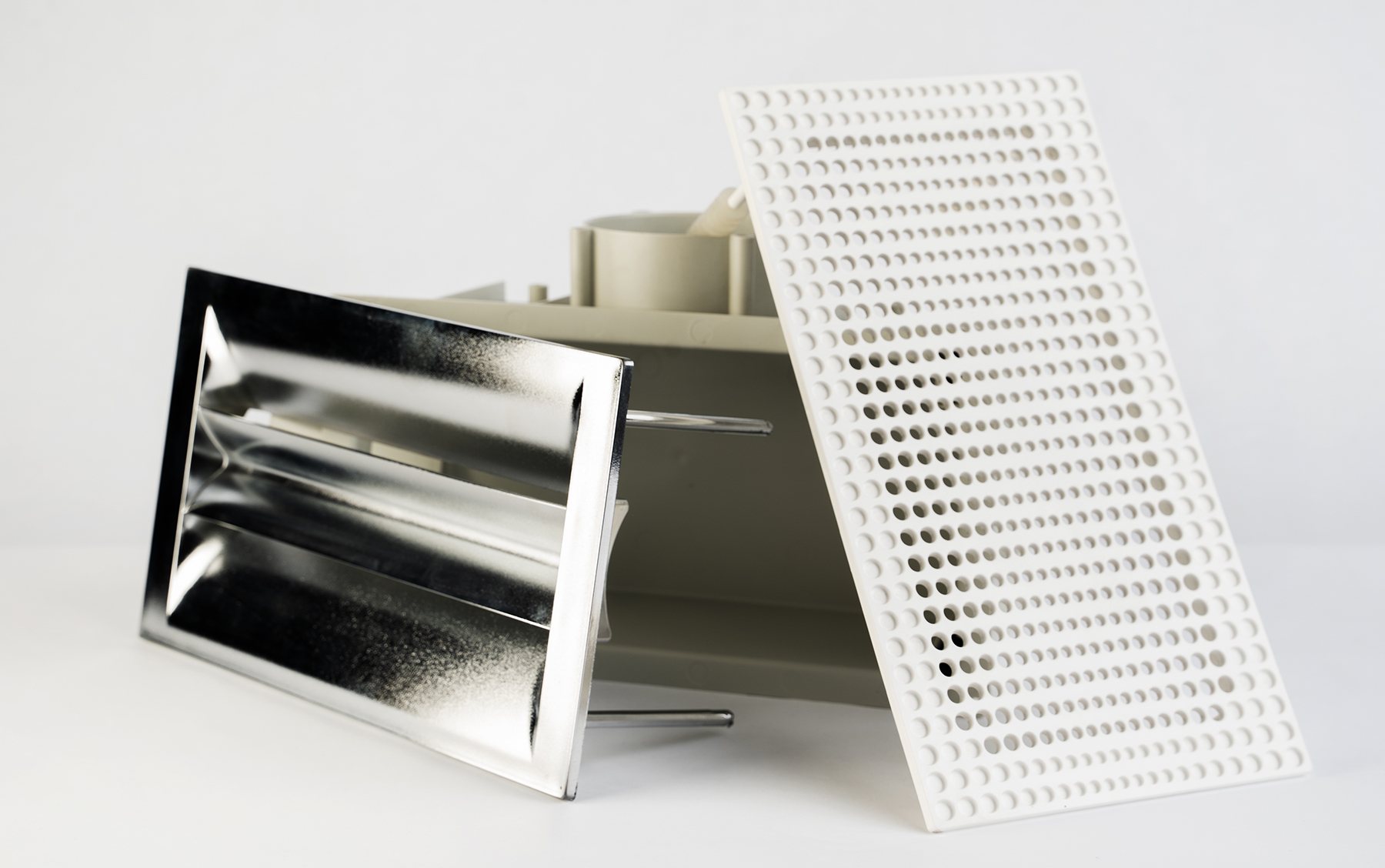
Realisation of a ventilation component with a focus on technical performance and optimisation of the production cycle. A complete process was envisaged: from reengineering, to mould manufacture, to moulding with advanced engineering polymers.
Sector:
Technologies involved:
Initial requirement
In the forced air distribution sector, the customer’s objective was to redesign a ventilation component by reducing its weight and size, without compromising functional performance. The intervention also required an improvement in appearance and an overall review of the production process, with the elimination of metal materials and secondary processing in favour of more efficient solutions.
What was the problem?
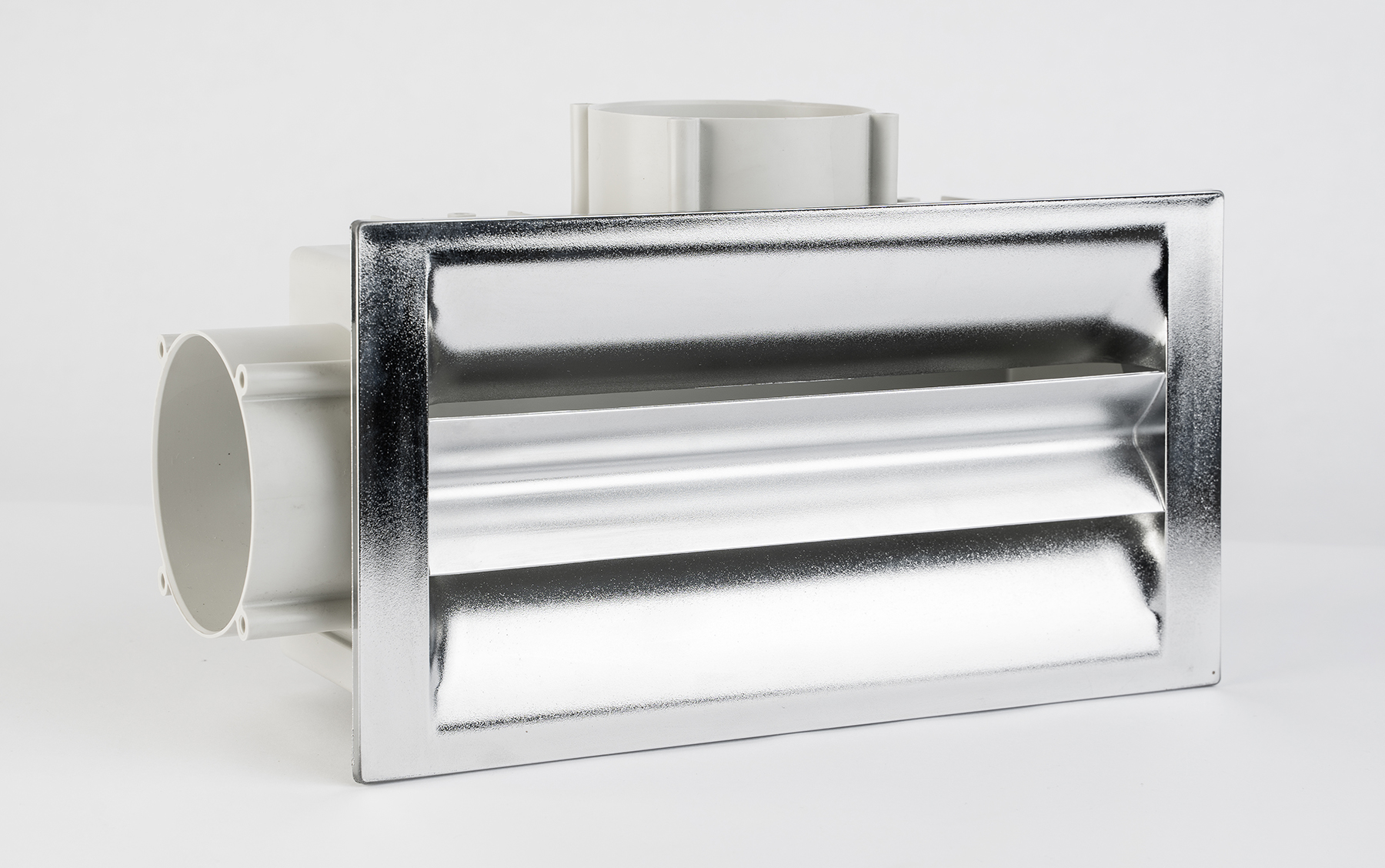
Existing components were complex to process and assemble, and poorly optimised in terms of weight, footprint and aesthetics. The use of metal and complex processes negatively affected costs and production time.
What was the client looking for?
A leaner, lighter and more precise (and aesthetically better) variant, capable of improving the overall performance of the system. Also crucial was cost optimisation through the elimination of complex processes and the adoption of better performing alternative materials
The challenge
The objective was to redesign a complex component, originally made of metal, to make it suitable for injection moulding with high-performance engineering polymers. The new design was to simplify production and maintain the technical reliability of the part.
- Replacement of metal with a technical polymer.
- Adaptation of the design for moulding.
- Combination of different materials.
- Maintaining performance with a lighter structure.
The process
The realisation was managed in-house at every stage, from analysis to final production. The objective of metal replacement with an engineering polymer required a complete redesign of the component, oriented towards production efficiency, optimisation of geometries and the targeted selection of materials according to their application.
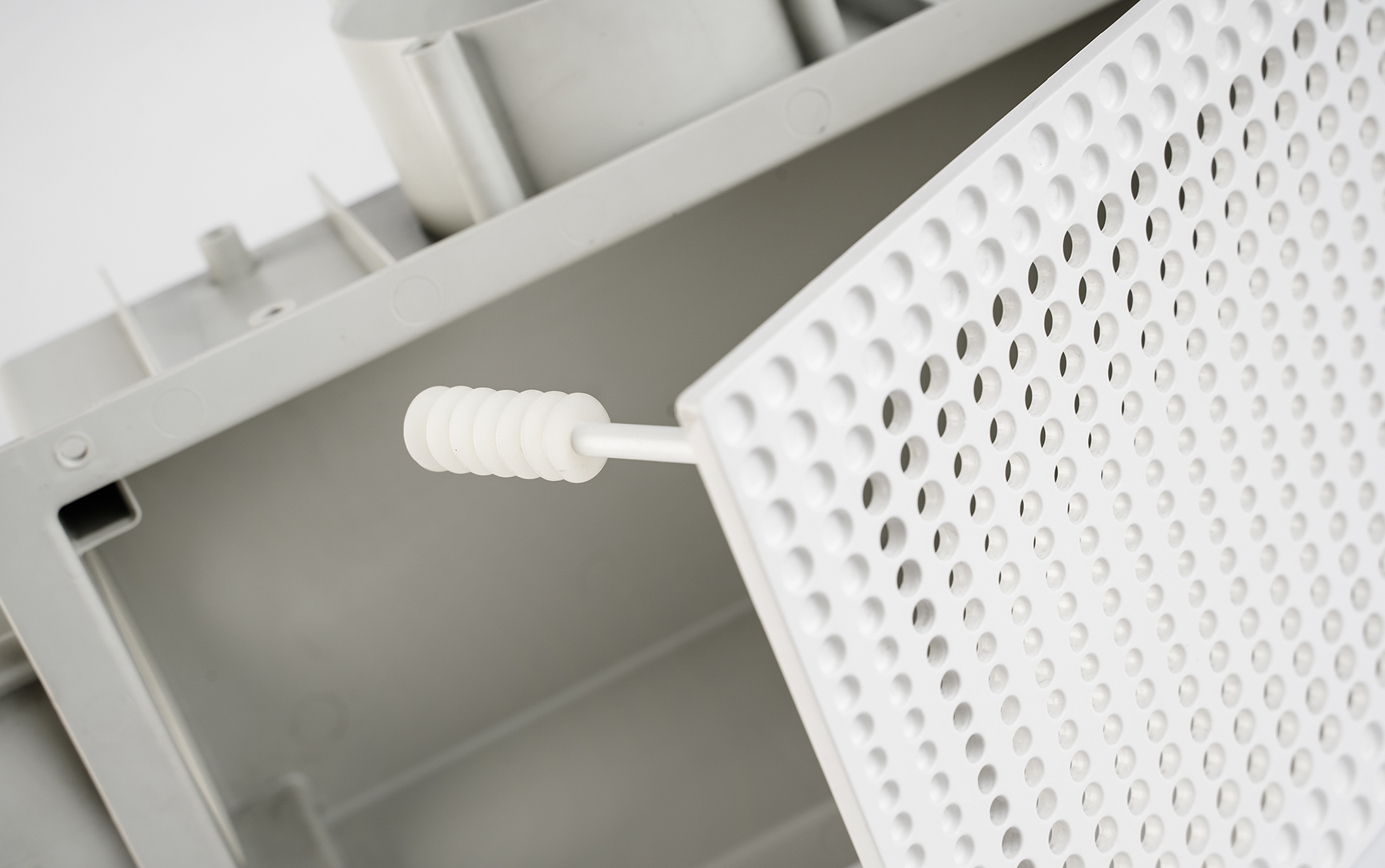
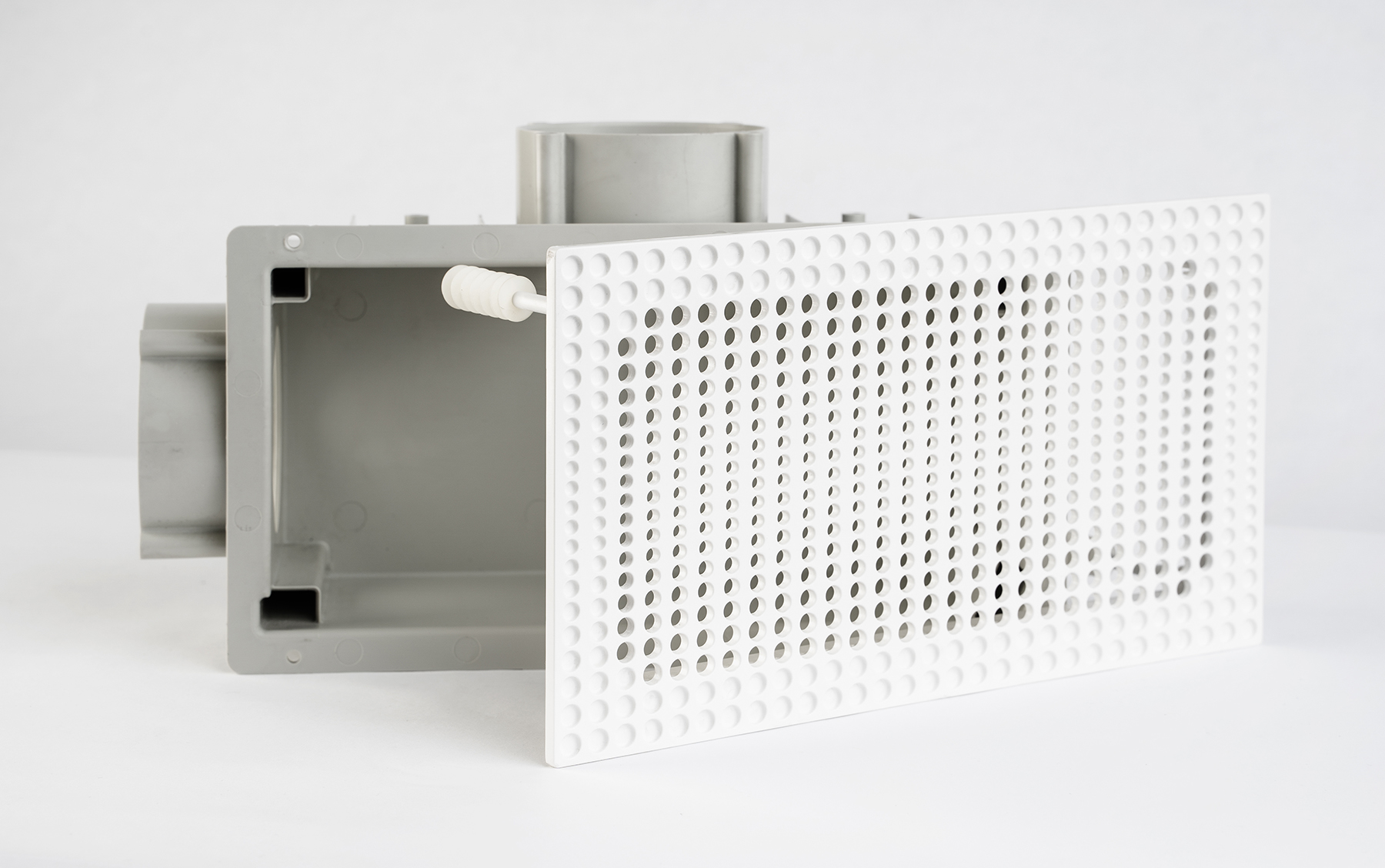
The original component was redesigned to be mouldable in engineering polymer, with a focus on precision, compactness, and functional integration. The layout was optimised to achieve a lightweight yet strong structure. (aesthetically enhanced)
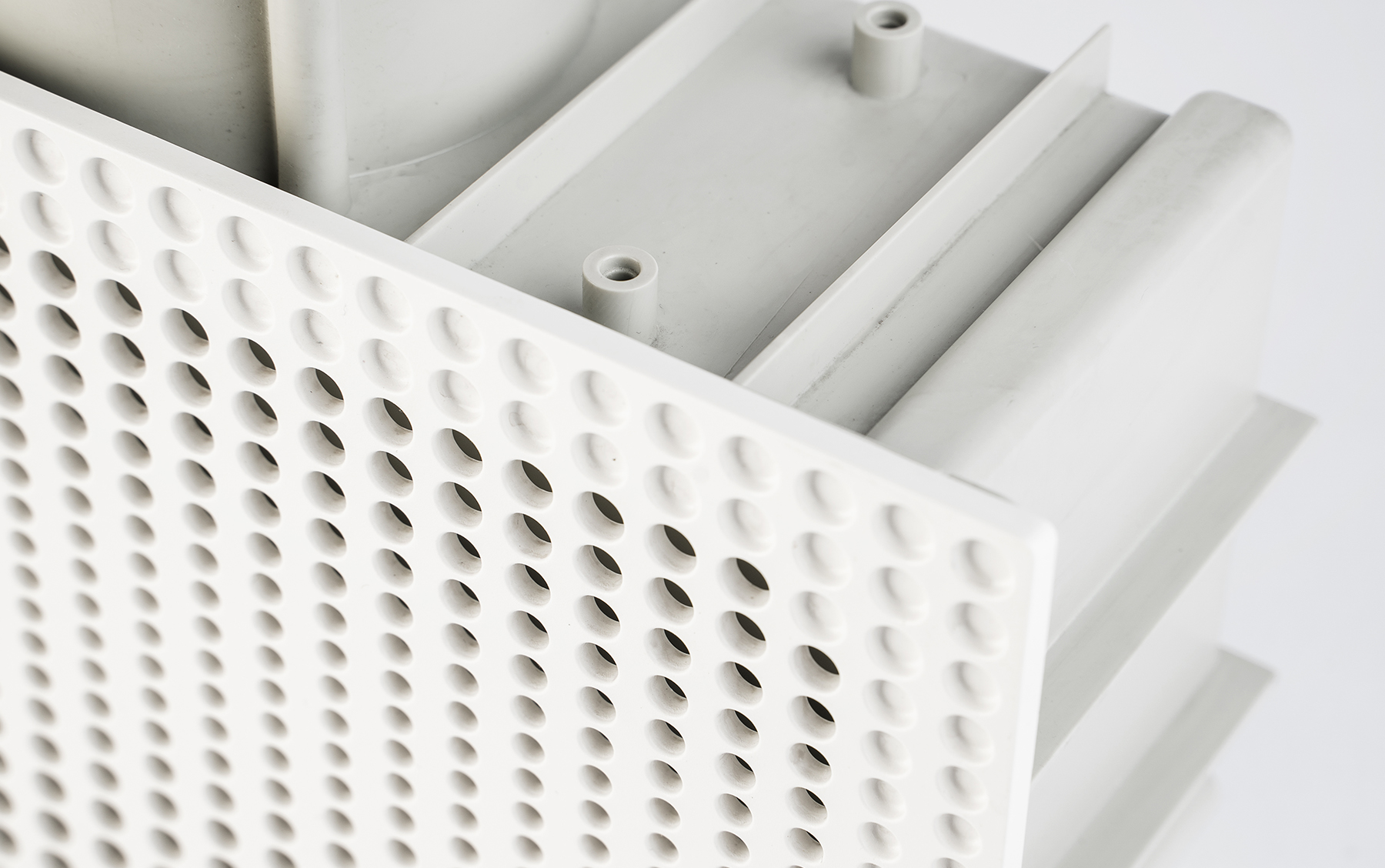
The new version of the component involved the use of high-standard polymers, selected according to the different areas of the part. In some cases, bi-material moulding was used, to combine different properties within the same element.
The mould was designed to ensure precision and repeatability over time. The ability to mould in bi-material required the configuration of specific inserts and cycles for combined material handling.
Production started with injection moulding, both in traditional and bi-material modes. Process optimisation has simplified production and assembly, as well as improved the uniformity of the finished part, reducing time and costs compared to the previous version.
The result
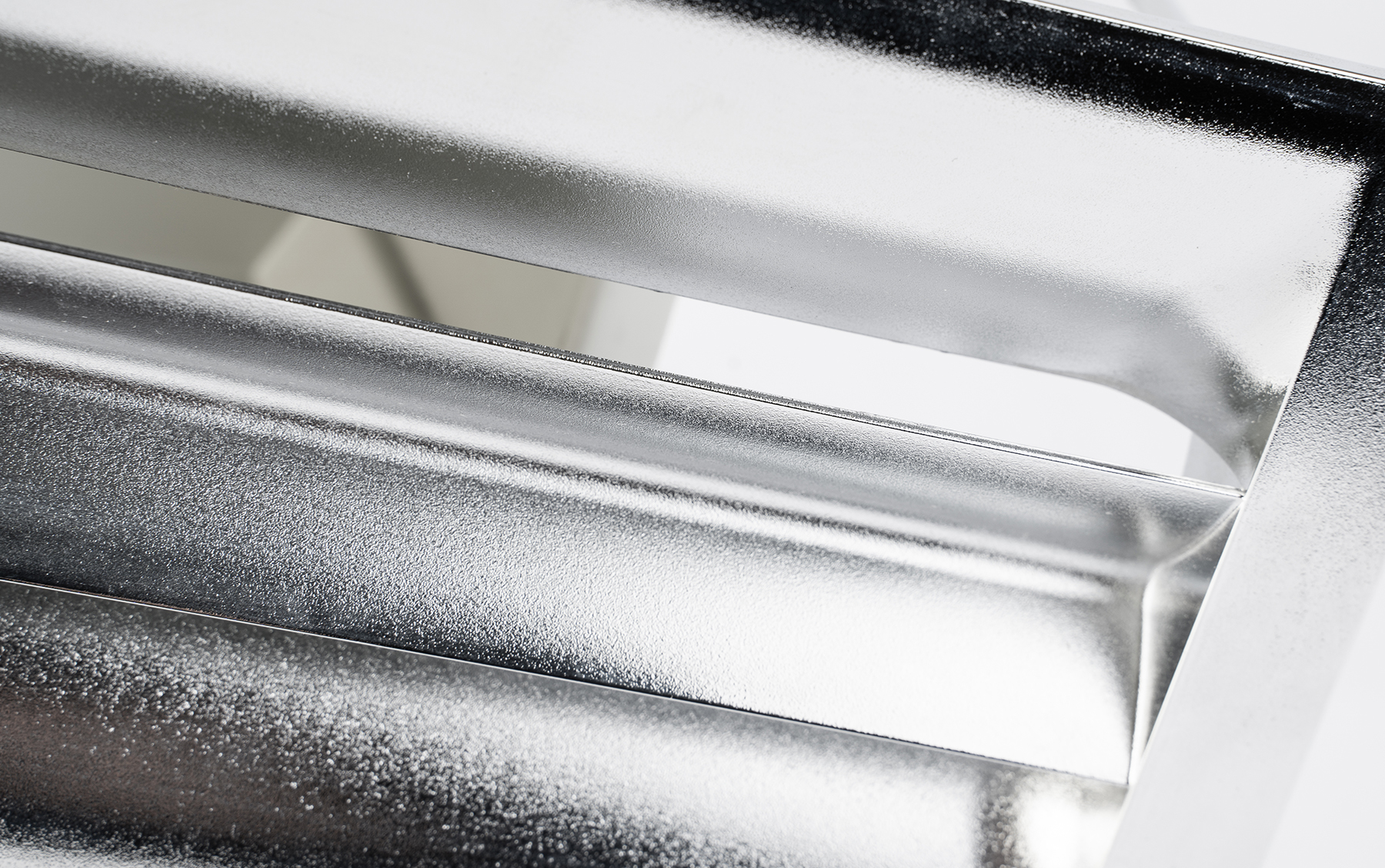
The redesign resulted in a low-weight, functional and visually appealing component. The adoption of specific engineering polymers made it possible to simplify the workflow, reduce the weight and size of the component, and the economic investment in production.
Weight reduction.
Optimised overall dimensions.
Aesthetic improvement.
Reduced costs.
Do you have a similar project? Contact us!
If you are looking for a tailor-made solution or want to investigate the feasibility of an idea, our team is available for professional advice. We can support you at every stage of development, from initial analysis to production.